
Yarrow
The Alpine Herb of Blood, Bitterness + Women's health

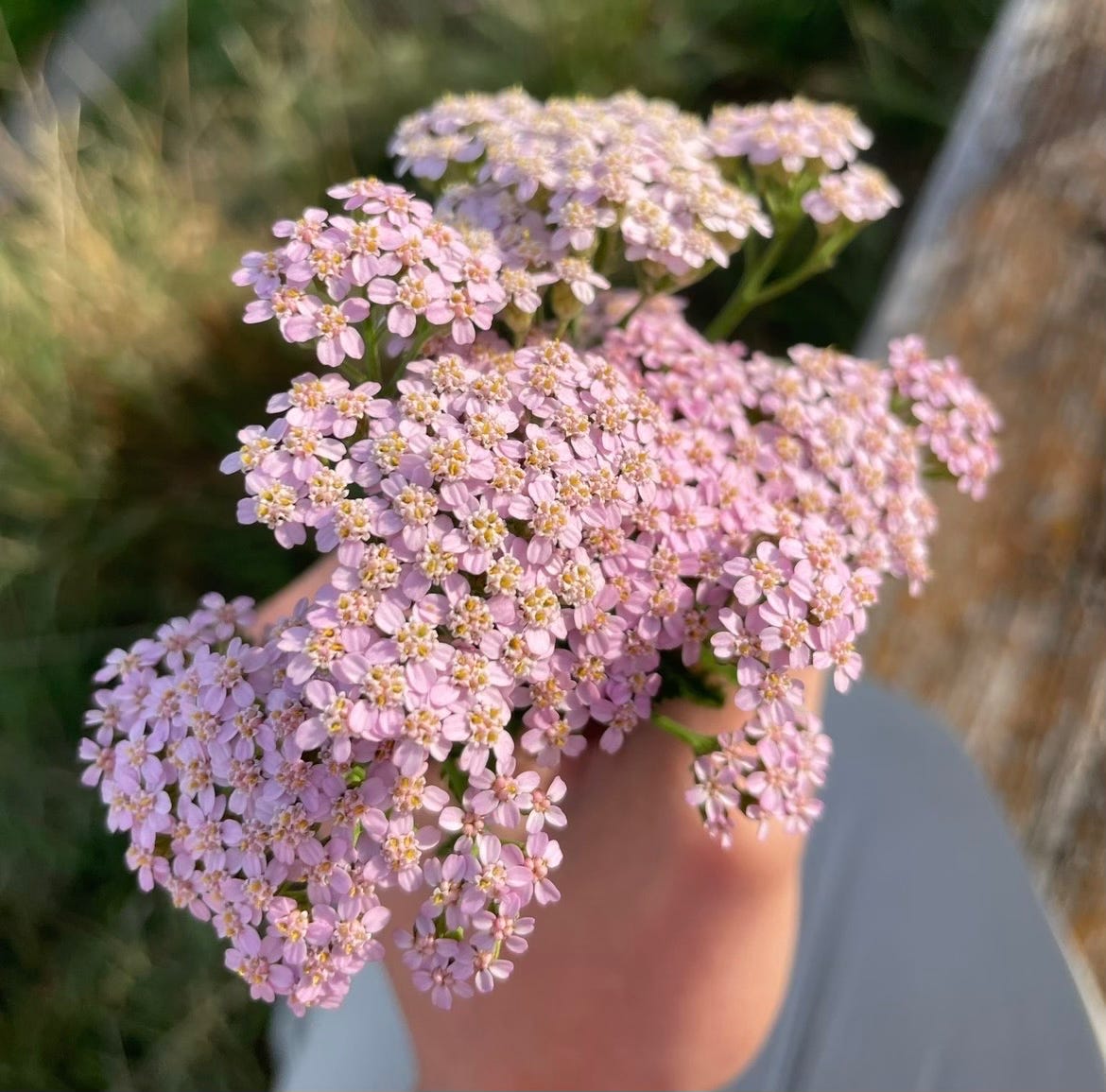
Yarrow, Achillea millefolium L., is one of those meadow plants that carries a long medicinal memory. In the Alpine landscape, it grows along paths, pastures, field edges, and sunny meadows, from the lowland, subalpine, to the highlands. A small white or pale-pink flowering herb with finely cut, feather-like leaves. Its German name, Schafgarbe, places it immediately in the world of animals, mountain grass, and old household medicine.
In South Tyrol, yarrow is not just a botanical species. It is a plant with many names, many places, and many layers of meaning.
Botanical classification
Yarrow belongs to the Asteraceae family, the same plant family as chamomile, calendula, arnica, dandelion, and mugwort. It is a perennial herb, usually around 10–50 cm tall, flowering from June to October. In South Tyrol, it grows in meadows, pastures, fields, semi-dry grasslands, and mountain areas from the valley floor up into higher elevations.
Botanically, Achillea millefolium is not always one simple plant. It belongs to a group of closely related “small species” or forms that can be difficult to distinguish. In South Tyrol, recorded forms include Achillea millefolium s.str., Achillea distans, and Achillea pratensis. This is a good reminder that traditional plant knowledge often works with living plant communities and not only with perfectly neat textbook categories.
The name millefolium means “thousand-leaved,” referring to the plant’s finely divided, feather-like leaves.
South Tyrolean Yarrow
What I love about yarrow in South Tyrol is how many dialect names it has. A plant with many names is usually a plant that mattered.
In different valleys and villages, yarrow was known by names such as Gouchal, Ggouchal, Gouchl, Köchal, Föchal, Tüchlplui, Krampfkraut, Bauchwehkraut, Tochal, Ochalkraut and others. These names were recorded in places, villages, valleys.
Some of these names tell us directly how the plant was understood. Krampfkraut points to its use for cramps. Bauchwehkraut points to stomach pain. The names Gochal or Kochal may come from an old word meaning “the quickly healing one,” which beautifully reflects yarrow’s old reputation as a wound-healing plant.
The German name Schafgarbe is also meaningful. It is connected to sheep, which may eat the leaves while avoiding the tougher stems and flower heads. The second part, “Garbe,” may relate to the idea of something prepared or kept ready, almost as if the plant should always be within reach.
And then there is the Latin name Achillea. It refers to the Greek hero Achilles, who was said to have healed wounds with this herb before the gates of Troy. Mythologically and medicinally, yarrow has always belonged to the world of blood, wounds, and repair.
Achillea moschata: The High Alpine Sister
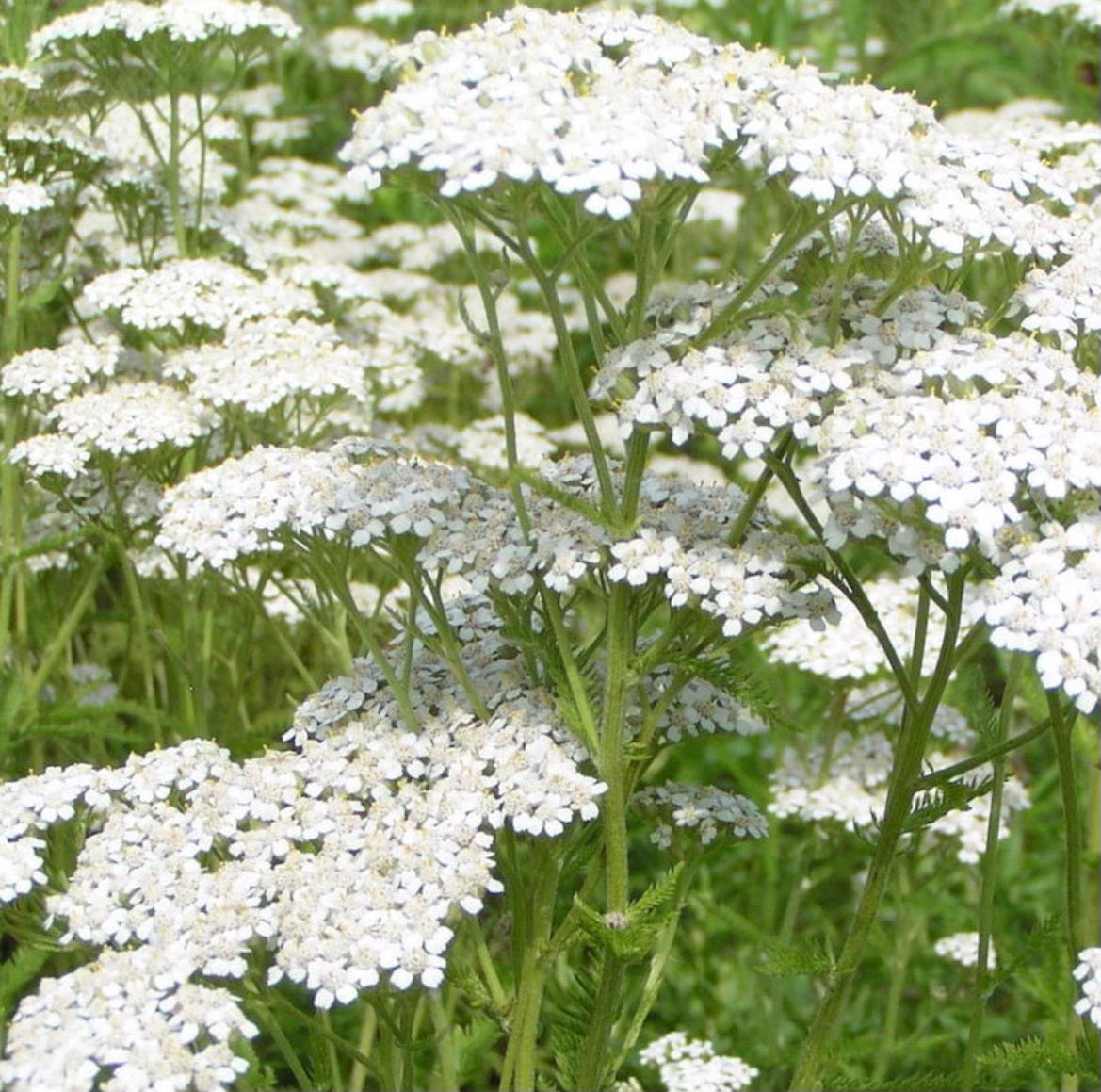
South Tyrolean plant tradition also includes Achillea moschata, known as Moschus-Schafgarbe. Unlike common yarrow, this species is more strongly tied to the alpine zone. It grows mainly in rocky grasslands and scree areas at around 1700–3000 m.
Its name comes from its aromatic, musky scent. In South Tyrolean dialects, it appears under names such as Jochseifa, Jochifer, Jochgif, Muaterkraut, Oberraut, Weißes Oberraut, Jochgrämille, Perk-Gromille, Perg-Schofgarbe and others. Many of these names connect it to the mountain, the “Joch”.
Ethnographically, Achillea moschata was especially valued for digestive complaints and diarrhoea. In some areas, it was collected by herders between June and September and sold to traders and apothecaries. This detail is important because it shows that Alpine medicinal plants were household remedies, but also part of local mountain economies.
In Ried/Reischach, different herbs were reportedly used depending on the severity of stomach upset: Iceland moss for lighter complaints, then Achillea moschata, then common yarrow, and finally wormwood as one of the strongest bitter remedies. I find this fascinating because it shows a very refined traditional understanding of degrees, strength, and herbal hierarchy of bitterness.
Medicinal Properties
Medicinally, yarrow is traditionally understood as a bitter, aromatic, astringent, anti-inflammatory, spasmolytic, and wound-supportive herb.
The European Medicines Agency recognises yarrow herb as a traditional herbal medicine for temporary loss of appetite, mild digestive complaints such as bloating and flatulence, minor menstrual cramps, and small superficial wounds. This is based on long-standing traditional use rather than strong clinical trial evidence, although laboratory studies have shown antibacterial, anti-inflammatory, and spasm-reducing activity.
Its chemistry helps explain why yarrow has been so widely valued. Yarrow contains bitter principles, essential oils, flavonoids, phenolic acids, tannins, and other compounds that contribute to its digestive, anti-inflammatory, astringent, and wound-supportive actions.
In simple herbal language: yarrow wakes up digestion, helps move stagnation, calms spasm, supports the skin, and helps the body contain what is excessive.
Women’s Health
For women’s health, yarrow (Achillea millefolium) has a long traditional reputation as a herb of blood, flow, and pelvic tension. It is especially relevant for mild menstrual cramps, where its spasmolytic and anti-inflammatory actions may help ease discomfort.
The South Tyrolean name Krampfkraut feels very fitting here. It reflects exactly the kind of use many herbalists still associate with yarrow today: tension, cramping, coldness, and stuck flow. In Alpine folk medicine, yarrow was also connected with menstruation and menopause, often as tea or as a bath infusion.
What makes yarrow fascinating is its dual nature. It can support movement where there is stagnation, but its astringency also gives it a containing and toning quality. I think of it as a herb for the moments when the body needs both release and repair.
Because of its traditional association with menstruation and uterine activity, I would definitely avoid internal use during pregnancy.
How I Would Use It
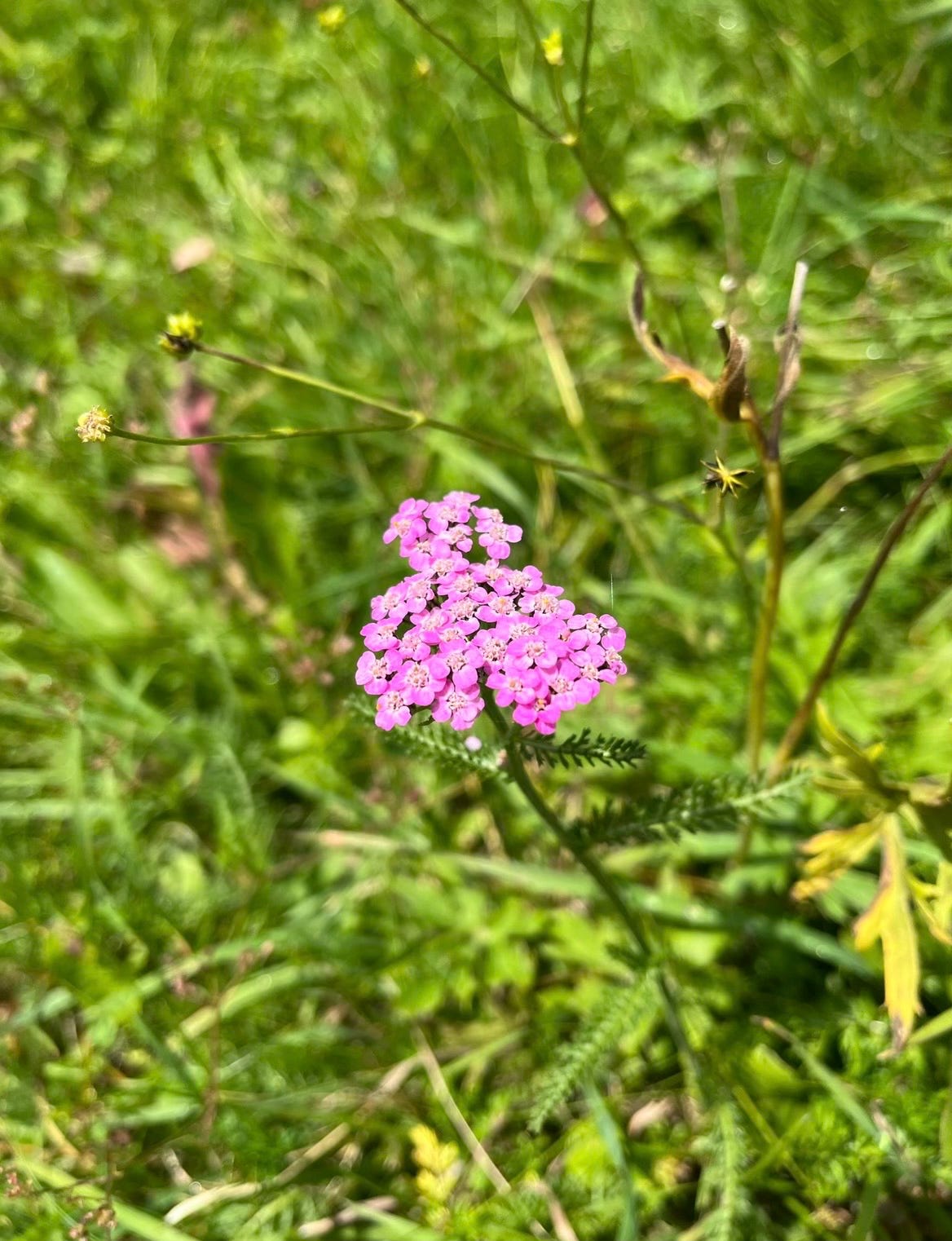
As a tea, yarrow works well when there is digestive heaviness, bloating, low appetite, or that cold, tense feeling before or during menstruation. Traditionally, it may also be used externally as an infusion for minor wounds or as a bath herb, or yoni steam for pelvic discomfort.
Its taste is bitter, aromatic, slightly sharp, and drying. A good reminder that this is a potent medicinal plant, not just a pretty meadow flower.
For period cramps, a tincture can be effective.
For a simple tea, I would use around one teaspoon of dried yarrow per cup, infused for 10 minutes. Because it is bitter and drying, I would not drink it endlessly as a daily lifestyle tea. I would use it with intention.
Safety
Yarrow should be avoided by people with allergy or hypersensitivity to yarrow or other Asteraceae plants such as chamomile, arnica, mugwort, or calendula.
Internal use is generally not recommended during pregnancy unless guided by a qualified practitioner. If symptoms are severe, unusual, persistent, or related to heavy bleeding, intense pain, infection, or chronic digestive issues, it is important to seek medical or professional herbal support.
Reflection
Yarrow is one of the great Alpine boundary plants. It's so common, but I love it like on the first time it crossed my realms. It grows where meadow meets path, where wildness meets household medicine, where wound meets repair.
In South Tyrol, its many names reveal a plant deeply woven into local memory. A herb for cramps, stomach pain, wounds, digestion, menstruation, animals, shepherds, and mountain households.
Small, white, maybe even pink (love it), and easily overlooked, it carries an old intelligence: bitter enough to wake digestion, aromatic enough to move stagnation, astringent enough to hold the edges together.
A meadow herb, a wound herb, a blood herb. One of the quiet ancestral medicines of the Alps.
With Love,
Teresa <3